
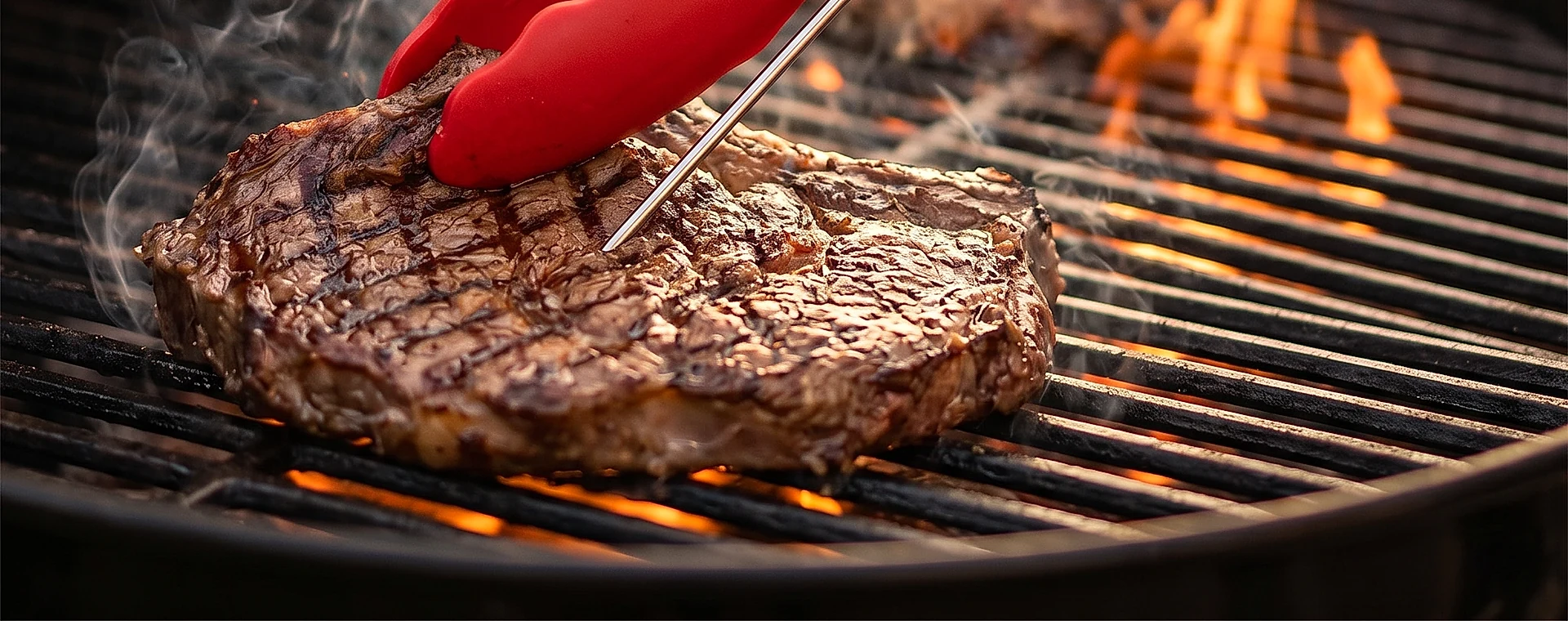
Grill Temperature Guide
Meat Thermometer Guide for Grilling
Learn the difference between a meat thermometer and a BBQ or grill thermometer, then find safe internal temperatures and the right probe position.
Choose the right measurement
Meat thermometer or BBQ thermometer: what does each measure?
A meat thermometer checks the food itself. A grill or BBQ thermometer may measure cooking-chamber or grate temperature. Instant-read tools are used for quick spot checks; leave-in probes monitor over time.
Quick answer
What temperature should grilled food reach?
Under United States guidance, whole cuts of beef, pork, veal and lamb reach at least 145°F / 63°C with a three-minute rest; ground meats reach 160°F / 71°C; poultry and leftovers reach 165°F / 74°C.
Regional note: Official targets differ by country. Use the guidance selected for this market and follow package or local public-health instructions whenever they are stricter.
Illustrated chart
United States safe internal temperature reference
These values summarize current USDA FSIS consumer guidance. They are safety minimums, not preferred doneness targets.
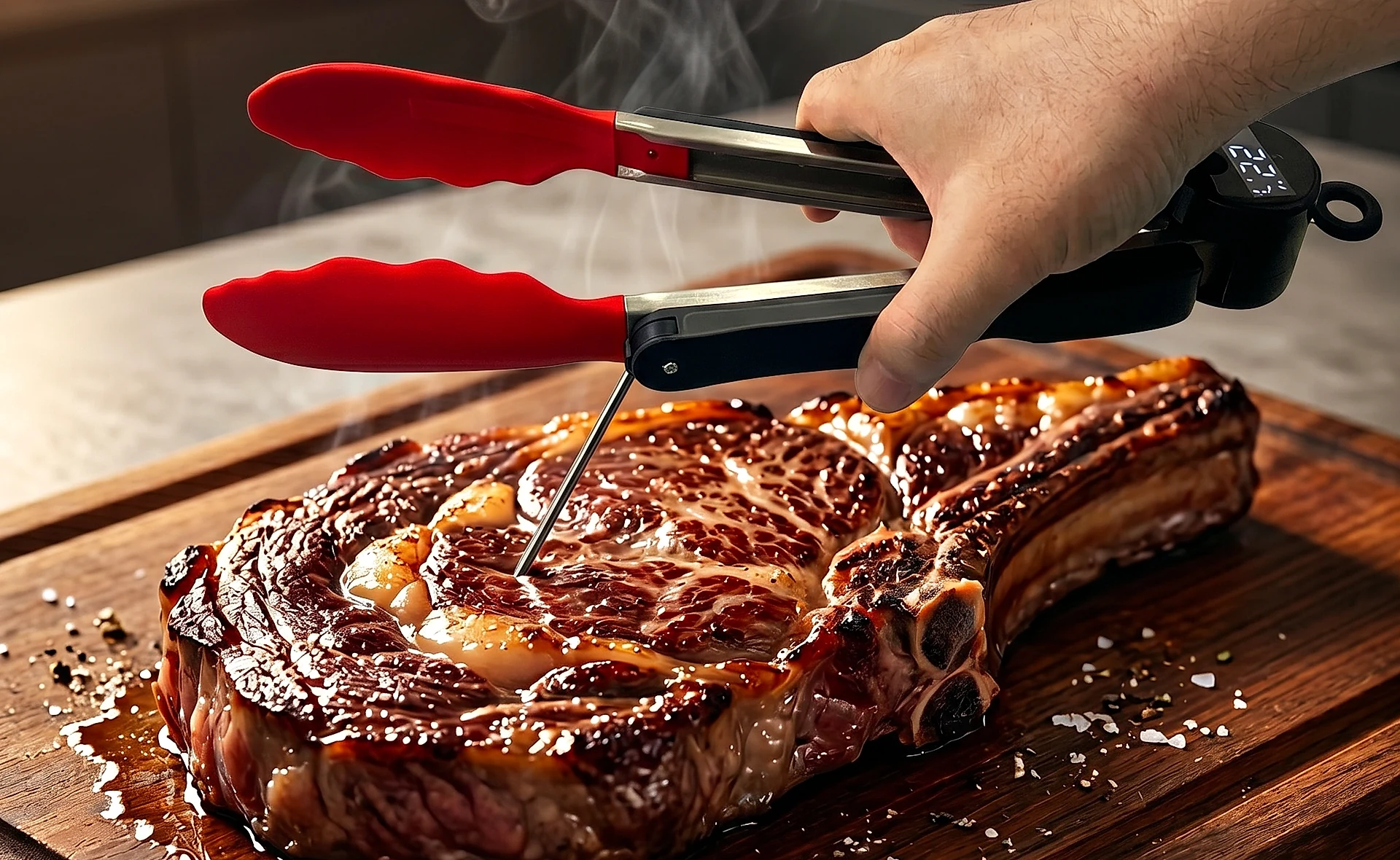
145°F 63°C
Whole beef, pork, veal & lamb
Steaks, chops and roasts. Rest at least 3 minutes before carving or eating.

160°F 71°C
Ground meats
Ground beef, pork, veal and lamb, including burgers, meatballs and sausage.
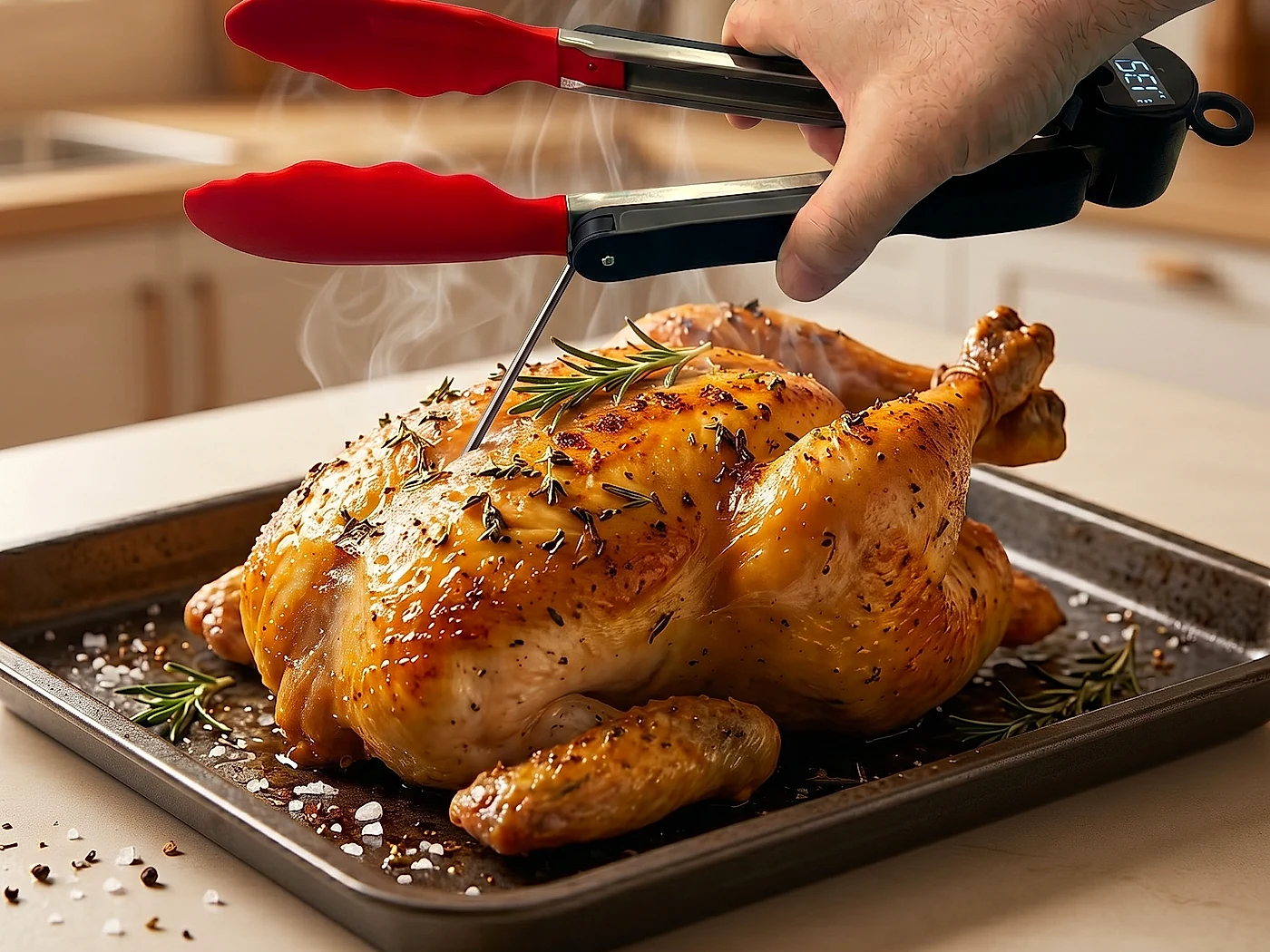
165°F 74°C
All poultry
Breasts, thighs, wings, whole birds, ground poultry, giblets and stuffing.

145°F 63°C
Fish
Measure fin fish at the thickest portion or centre and follow any stricter product guidance.

165°F 74°C
Leftovers & casseroles
Reheat leftovers and cook casseroles to the centre, checking more than one spot when needed.
How to measure
Where should a food thermometer go?
Find the thickest part
Aim for the center, away from bone, fat and gristle.
Approach thin food from the side
This helps the sensing area reach the center of a burger, chop or thin fillet.
Read in 1–2 seconds
Keep the probe in the center while the 1–2 second reading appears. Check more than one spot when thickness is uneven.
Clean between checks
Prevent cooked food from being contaminated by juices from raw or undercooked food.
People also ask
Grill temperature questions, answered directly
Is color a reliable way to know meat is safe?
No. Color and texture indicate doneness preferences, but official food-safety guidance recommends verifying a safe minimum internal temperature with a food thermometer.
Do rest times and target temperatures differ by country?
Yes. For example, a three-minute rest is part of United States guidance for certain whole cuts, while other countries publish different targets or time-and-temperature combinations. Follow the official source shown for your market.
Where do I check a whole chicken?
Check the thickest parts away from bone and measure more than one location. Whole-poultry targets differ by country, so use the official regional source shown below.
Can I leave an instant-read probe in food while it cooks?
Only if the manufacturer expressly says that model is designed to remain in the food. ThermoTongs is presented here as a spot-checking tool; follow its supplied instructions.
Why can Canadian and US temperatures differ?
National authorities use their own risk assessments and consumer guidance. Follow the current official source for the location where you are cooking.
Is this guide a substitute for public-health advice?
No. It is a practical summary. Always follow current local guidance, food packaging, recipes for vulnerable groups and any stricter instruction that applies.
Official food-safety guidance for this region: U.S. Department of Agriculture Food Safety and Inspection Service (USDA FSIS). Guidance checked July 24, 2026.
ThermoTongs
Need fast spot checks while the food stays in your control?
See how BBQ tongs with a built-in meat thermometer combine gripping, turning and centre-temperature checks.