The short answer
A useful grilling setup does not need dozens of tools. For most outdoor and home cooking, start with five jobs: prepare food, handle it over heat, check temperature, keep raw and ready-to-eat items separate, and serve on clean equipment. Choose one dependable tool for each job, then add lighting, weather protection, or specialized cookware only when your cooking routine calls for it.
The right checklist depends on where you cook. A backyard grill gives you room to stage trays and long tools. A small patio rewards compact storage. An indoor kitchen may have better lighting and counter space but still needs the same separation between raw food and food that is ready to eat. Build the kit around the route food takes from refrigerator to cooking surface to plate.
Start with the cooking route, not a shopping list
Many grilling lists begin with products. That can leave you with a drawer full of accessories and one missing item when dinner is nearly ready. A better approach is to picture a normal meal from beginning to end.
First, food is trimmed, seasoned, or portioned. Next, it moves to the grill or pan. During cooking, it must be turned or repositioned and checked for the applicable internal temperature. Once ready, it needs a clean landing place that was not used for raw meat, poultry, or seafood. Finally, the tools and work surfaces need the care specified for each item.
Each stage creates a job:
- Preparation needs a stable work surface, an appropriate knife, and a board or tray.
- Cooking needs a tool that can grip or turn food with enough control for the task.
- Temperature checking needs a food thermometer suited to spot checks or continuous monitoring.
- Serving needs a clean plate, platter, or tray.
- Cleanup and storage need space and the current care instructions for every tool.
If a purchase does not solve one of those jobs, it may not deserve space in the kit.
The core outdoor and home cooking checklist
A stable preparation surface
Outdoor cooking often spreads preparation across a kitchen counter, a patio table, and the grill shelf. That makes it easy to lose track of which surface held raw food. Set up a clear preparation zone before the grill is hot.
Use a board or plate for raw meat, poultry, or seafood and a separate board or plate for produce, bread, and other foods that will not be cooked. The CDC advises keeping raw animal foods separate from ready-to-eat food and using separate boards or plates for those categories. This is a workflow rule, not a feature that any single grilling tool can replace.
A handling tool matched to the food
Tongs are useful for many foods because they can grip, lift, turn, and reposition without piercing the surface. A spatula may give better support to burgers or delicate fish. A grill basket can keep small vegetables from falling through a grate. The food and cooking surface should determine the tool.
Reach matters outdoors, but longer is not automatically better. Extra length can keep a hand farther from direct heat, while the shape and balance affect control. For a more detailed buying framework, see our guide to choosing long BBQ tongs.
A thermometer for the measurement job
Color and texture are not reliable substitutes for temperature. The CDC says a food thermometer is the way to determine whether food is safely cooked, with the agency's stated seafood exception. The applicable target varies by food, so keep a current reference nearby. The KINGEAR Grill Guide summarizes current U.S. guidance and explains the difference between major food categories.
Choose the thermometer type according to the cooking method. A spot-check thermometer answers, "What is the temperature here right now?" A leave-in probe follows one location over time. Grilling several burgers, chicken pieces, or vegetables often involves repeated handling and spot checks. A long roast or low-and-slow cook may be better suited to continuous monitoring. Some kitchens need both.
Separate raw-food and ready-to-eat landing zones
The plate that carried raw chicken to the grill should not become the serving plate unless it has been properly cleaned. Put the clean platter in a separate place before cooking begins. If several people are helping, make the distinction visible rather than relying on memory.
A simple two-zone arrangement works indoors or outside:
| Zone | Typical items | Rule |
|---|---|---|
| Raw-food zone | Raw-food tray, seasoning tools, raw-food board | Keep away from bread, produce, cooked food, and the clean serving platter |
| Ready-to-eat zone | Clean platter, serving utensil, buns, salads | Do not return raw-food equipment here until it has been properly cleaned |
The CDC also advises washing utensils, cutting boards, and countertops with hot, soapy water after preparing each food item. That is general kitchen guidance. For any electronic or combined tool, follow its current manufacturer care instructions and do not assume that the whole product can be immersed or placed in a dishwasher.

Heat, light, and storage support
Heat-resistant protection, lighting, and storage matter when the setting creates a real need. Grill mitts should fit the person and the task. A light should illuminate the cooking surface without forcing the cook to hold a phone. A tray or caddy can reduce trips between the kitchen and patio.
Storage can be the deciding factor in a smaller home. Before buying a large set, measure the drawer, cabinet, shelf, or hook where it will live. Compact tools that perform repeated jobs may be more useful than a matching set with pieces that rarely leave the box.

How the checklist changes by cooking setting
Backyard or patio grill
A backyard setup can support separate staging areas. Put raw ingredients on one side and clean serving equipment on the other. Keep the thermometer, handling tool, and clean platter within reach before cooking begins. If the grill is far from the kitchen, bring a small bin or tray for items that need to return inside for cleaning.
Wind and changing light can alter the practical setup. Secure paper towels and light objects. Add a task light for evening cooking. Keep charging and electronic accessories away from heat and weather unless their current instructions explicitly permit the exposure.
Small balcony or compact outdoor space
In a small space, every item should have a clear job. A compact board, one suitable handling tool, a thermometer, and two clearly separated plates may cover the essential workflow. Avoid building a pile on the grill shelf, where clean and raw items can become confused.
Check building rules and the appliance maker's instructions before choosing any cooking equipment for a balcony. The tool checklist cannot make an unsuitable cooking location acceptable.
Indoor kitchen and stovetop cooking
The same principles apply indoors. A pan, griddle, or indoor grill still needs controlled handling and temperature checks where appropriate. The advantage is easier access to clean counters, running water, and storage. The risk is that a crowded counter can mix preparation and serving zones.
Clear one area for the final plate before raw food is opened. Put away grocery packaging early. Keep the clean serving utensil out of the preparation area. Those small decisions make the route from raw to ready-to-eat easier to follow.
Camping and tailgating
Portable cooking adds transport, limited water, and fewer work surfaces. Pack by function rather than by room: preparation, cooking, measurement, serving, cleanup, and storage. Bring enough clean plates or trays to preserve raw and cooked separation. Confirm how each tool should be cleaned and stored before leaving home, especially when water access will be limited.
Do not improvise product-care methods at the campsite. If the maker does not state that an electronic tool is waterproof, submersible, or dishwasher safe, do not treat it as though it is.
When a combined tool can simplify the kit
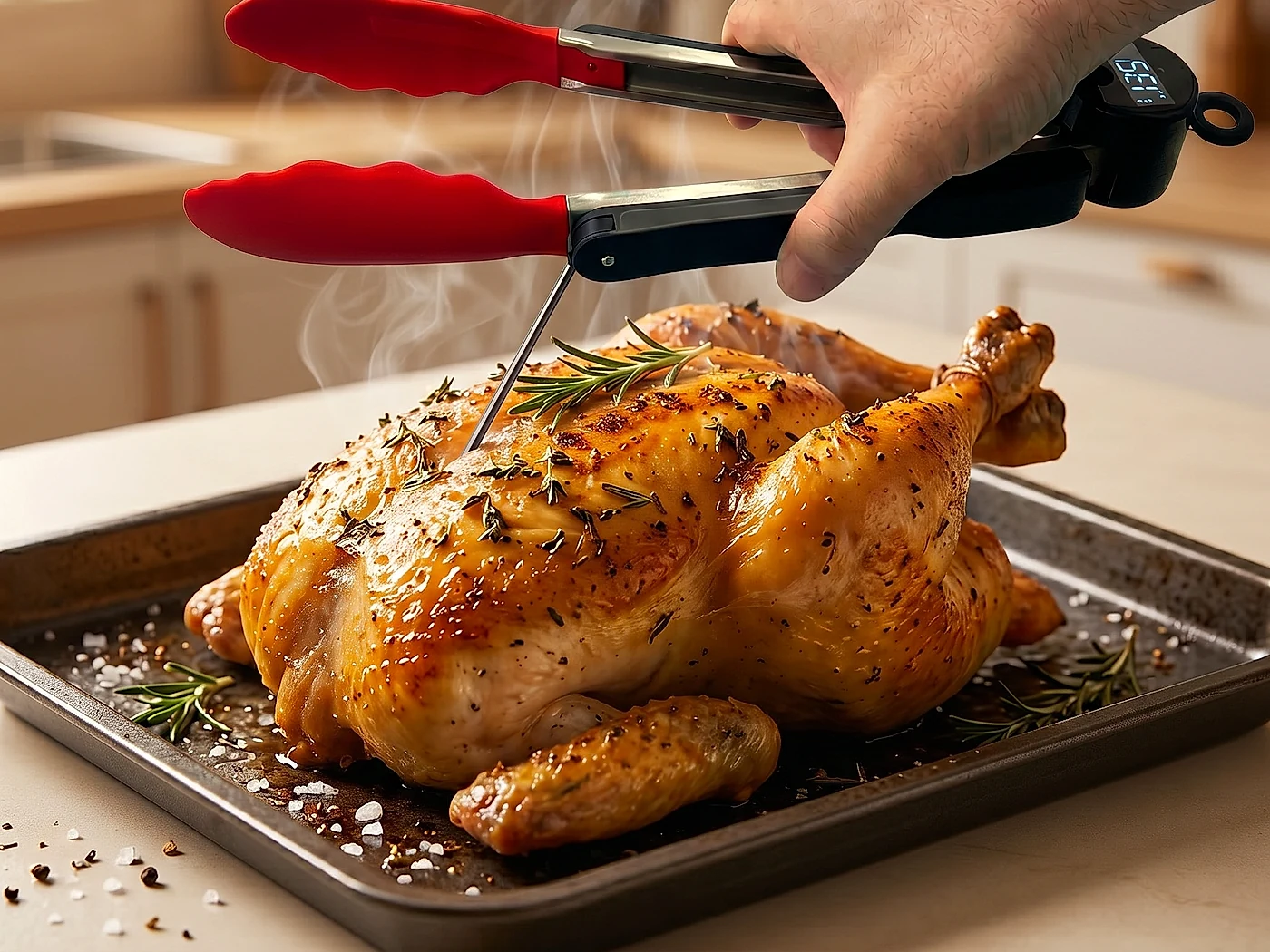
A multi-purpose tool earns its place when its functions happen in the same part of the workflow. Gripping, turning, and spot checking often occur close together during grilling. KINGEAR ThermoTongs combines a tong body with a fold-out probe for spot temperature checks.
The current product page states a 12-inch overall length, a 1 to 2 second reading response, rechargeable operation, USB-C charging, and red food-grade silicone tips rated to 260 C / 500 F. The tip rating applies to the red silicone tips, not to the entire tool. The response specification describes the reading workflow and is not an independent accuracy guarantee.
ThermoTongs is a spot-check tool, not a leave-in thermometer. It may fit a cook who repeatedly grips, turns, and checks individual pieces and wants fewer tool changes. It does not remove the need for raw and ready-to-eat separation, a clean serving plate, or food-specific temperature guidance. The ThermoTongs use guide explains the product workflow and its boundaries.

What not to buy first
Large sets can look complete while missing the one tool that matches the cook's actual routine. Before adding a specialized accessory, ask whether it solves a repeated problem.
Be cautious with:
- duplicate handling tools that perform the same job;
- novelty gadgets without a clear storage place;
- electronics with care requirements that do not fit the kitchen;
- oversized equipment for a small patio or drawer;
- tools selected only because they have more features;
- temperature devices chosen without deciding between spot checks and continuous monitoring.
The goal is not the fewest tools at any cost. It is a kit where each item has a reason to be present.
A ten-minute setup before cooking
Use this quick routine before heat is involved:
- Clear and identify the raw-food preparation area.
- Put a separate clean platter in the ready-to-eat area.
- Choose the handling tool that suits the food.
- Confirm the thermometer type and current food-temperature guidance.
- Place lighting, mitts, and support items where they can be reached safely.
- Check that electronic tools are charged if required.
- Keep manufacturer care instructions available instead of assuming a cleaning method.
This setup takes less time than searching for a clean plate while food is already on the grill.
Frequently asked questions
What grilling tools do I need for outdoor and home cooking?
Start with a preparation surface, a suitable food-handling tool, a food thermometer, separate raw-food and clean serving plates, and the cleanup and storage supplies required by each tool. Add specialized items only for cooking jobs you perform regularly.
Do I need both tongs and a meat thermometer?
You need a way to handle food and a way to check temperature when the recipe or food-safety guidance calls for it. Those may be separate tools or a combined spot-check tool. A leave-in thermometer still serves a different continuous-monitoring job.
Can I use the same plate for raw and cooked meat?
Do not place cooked or ready-to-eat food on a plate that held raw meat, poultry, or seafood unless the plate has been properly cleaned. Setting out a separate clean platter before cooking is the simplest approach.
Is a longer pair of BBQ tongs always better?
No. More reach may help keep a hand farther from direct heat, but balance, control, food type, grill size, and storage also matter. Choose a length and shape that fit the actual cooking task.
Is an instant-read thermometer the same as a leave-in thermometer?
No. An instant-read thermometer provides spot checks at selected locations. A leave-in thermometer monitors one location during cooking. Many cooks use them for different jobs.
Are electronic grilling tools waterproof or dishwasher safe?
Only when the current manufacturer instructions explicitly say so. Do not infer immersion, waterproof, or dishwasher-safe status from appearance, materials, or one component's heat rating.
Build the kit around the next meal
For the next cookout, do not begin by adding more products. Walk through the meal once: prep, move, cook, check, serve, clean, and store. Mark the stage where the current setup causes a delay, duplicate movement, or confusion between raw and clean equipment. Fill that gap first. A small kit built around real tasks will usually work better than a large collection assembled from generic lists.
Sources
- CDC, Preventing Food Poisoning.
- KINGEAR ThermoTongs product page.
- KINGEAR Grill Guide.
- KINGEAR, How to Use KINGEAR ThermoTongs.