

Illustrative scene using an official product photograph. Displayed source-photo numbers are not cooking-temperature recommendations.
The short answer
Use thermometer tongs in a sequence: grip and move the food with the tong tips, transfer one piece to a clean plate, rotate the probe into position, insert it into the thickest part, and wait for the reading to settle. Keep the probe away from bone, the grate and the plate. If the food is below its Canadian safe internal temperature, return it to the grill, clean the probe and any contaminated surface, then check again later.
The built-in thermometer saves a tool change, but it does not replace good measuring technique. A fast display can still give an unhelpful result if the probe is in the wrong spot. One integrated tool can also carry raw juices unless it is cleaned at the right points in the cook. The method below keeps the convenience while following Health Canada's barbecue guidance.
Set up a clean checking station first
Prepare two off-grill areas before cooking. The raw area holds uncooked food and any plate or utensil that has touched it. The checking area needs a clean plate with enough room for one piece to sit flat. Keep warm, soapy water available for cleaning food-contact surfaces, or have a separate clean utensil ready for finished food.
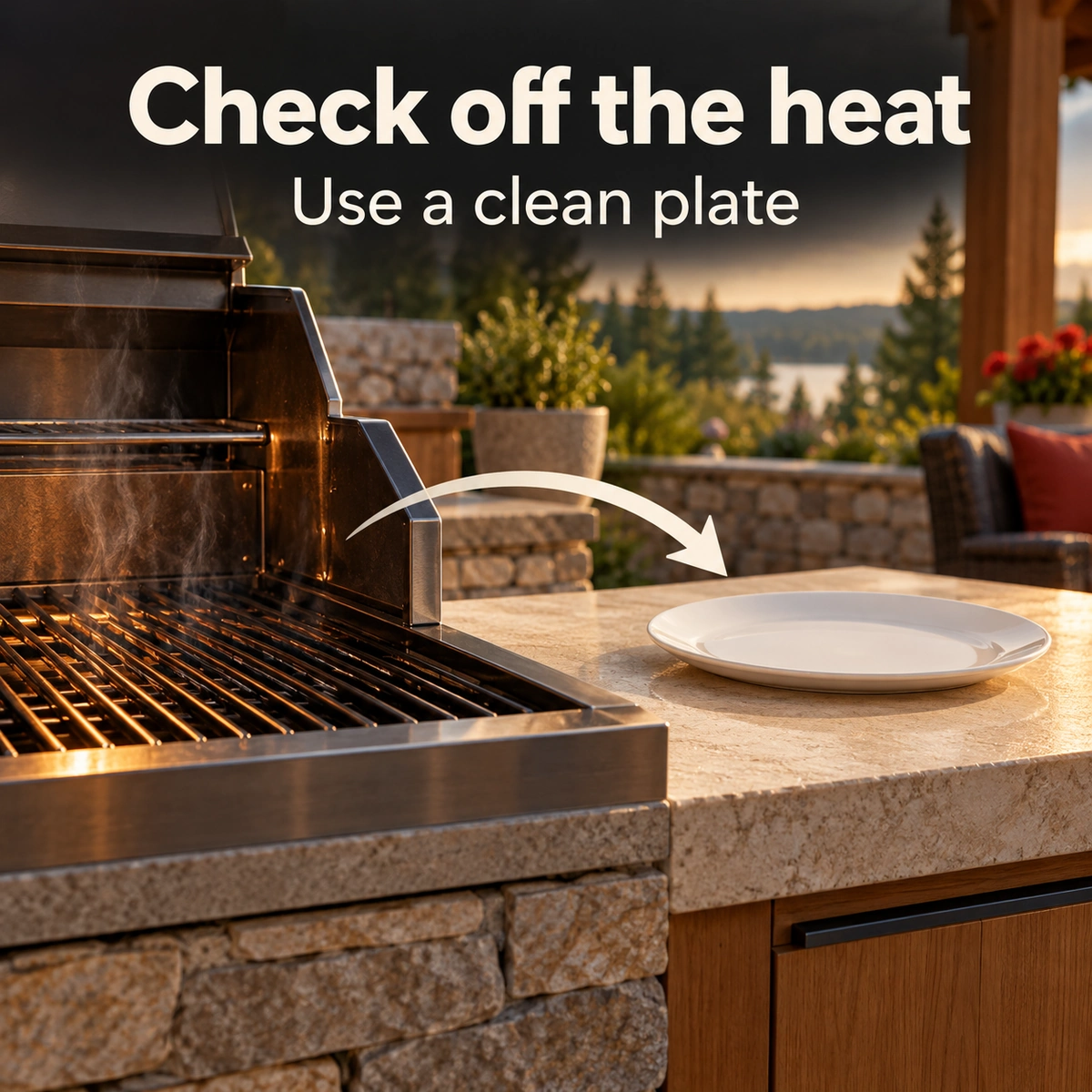
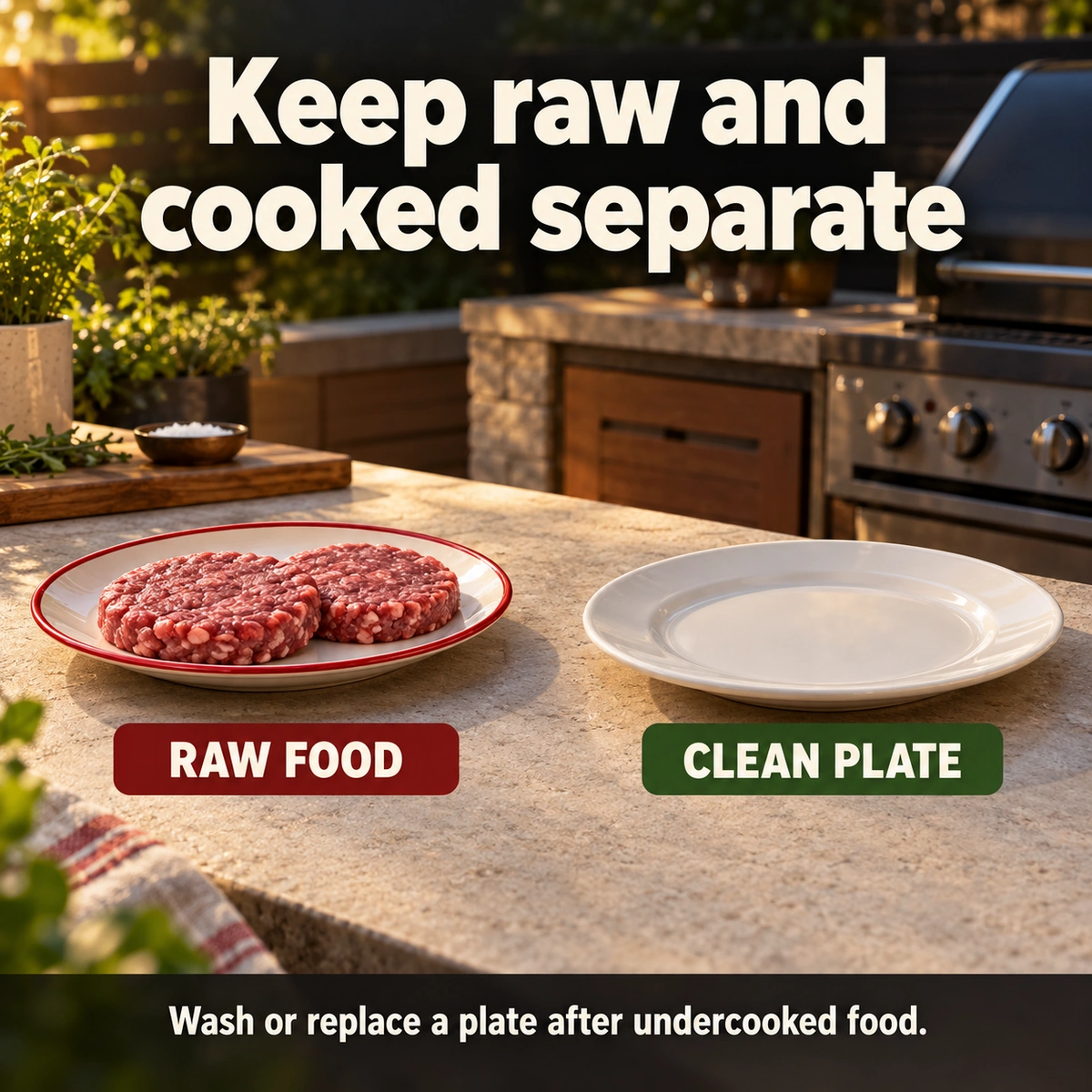
Health Canada says not to put cooked food on the same plate that held raw meat. Its barbecue guidance also says to take meat off the grill, place it on a clean plate, and then check it with a digital food thermometer. That short transfer gives you a steadier working surface, moves your hand away from flare-ups, and reduces the chance of touching the hot grate with the probe.
Before cooking, check that the probe and silicone tips are visibly clean and undamaged. Rotate the probe through its intended movement and confirm that the display works. Do not force a stiff probe beside a hot grill.
KINGEAR ThermoTongs are 12 inches long. Their red food-grade silicone tips are rated to 260°C/500°F. That rating belongs to the silicone tips, not automatically to the display, handle, charging area, electronics or every part of the tool. Keep the body away from direct flame, hot grates and prolonged radiant heat, and follow the supplied manual for use and care.
How to use ThermoTongs, step by step
1. Grip and turn with the probe folded away
Use the silicone tong tips for lifting, turning and repositioning food. Grip firmly enough to keep control, but avoid crushing burgers or squeezing delicate food. Leave the probe in its storage position until you are ready to measure.
When cooking several similar pieces, arrange them in an order you can remember, such as left to right. Similar-looking pieces can cook at different rates because of thickness, starting temperature and their position over the heat.
2. Transfer one piece to the clean plate
Lift the piece from the grill and put it on the clean checking plate. The transfer should be brief. You are creating a controlled place to measure, not leaving food out to cool.
This step also resolves a point that product marketing can make easy to misunderstand. A built-in probe lets temperature checking stay in the same tool workflow, but you do not need to hold the food over direct heat while reading it. Health Canada's clean-plate method is the better instruction for the barbecue check.
3. Open the probe and choose the entry point
Rotate the probe into position using its intended pivot. Do not use it as a hook, skewer or pry bar. If it has residue from an earlier check, clean it in warm, soapy water before placing it in another piece, while keeping water away from electronic areas as directed by the manual.
Aim for the thickest part and the thermal centre. Avoid bone, obvious fat pockets and gristle. For a burger, Health Canada advises inserting through the side. Side entry also helps with thin cutlets and fillets because more of the probe stays within the centre plane instead of passing through into the plate.
For detailed food-by-food diagrams, use the Canadian guide to where to insert a food thermometer. The key here is the tool sequence: steady the food lightly with the tongs, insert without squeezing it thinner, and keep the pointed end clear of the plate.
4. Wait for a stable reading
The current ThermoTongs page states a 1-2 second response. Response time and a usable final reading are related, but they are not identical. Hold the probe still and wait until the display stabilizes. If the number is moving quickly, do not make a serving decision from it.
In a thick or irregular piece, move the probe through the central area in small increments. Use the stable reading from a correctly placed probe. If the probe is moved to a nearby central point, let the display stabilize again before comparing the results. Stop before the probe reaches the surface, bone or plate.
Health Canada says to check each piece separately. A chicken thigh at the hot edge of the grill does not prove that the thicker thigh in the centre is ready. Follow your left-to-right order or another simple pattern so every piece is accounted for.
5. Compare, act and clean
Compare the stable reading with the current target for that food in the Canadian safe internal cooking temperature guide. Use the target for the exact category. Ground beef, poultry pieces, whole poultry and fish do not share one universal number.
If the piece is below its target, return it to the heat. The checking plate has now held undercooked food, so wash or replace it before it receives finished food. Clean the probe in warm, soapy water between readings, as Health Canada directs. Also clean tong surfaces that touched undercooked food before they handle a ready-to-serve piece.
If the food has reached its target, transfer it to a clean serving plate. Clean the probe before folding it away, and let hot surfaces cool enough to handle safely.
Getting a meaningful reading from thin or uneven food
Thin food creates a geometry problem. A probe pushed down from the top may cross the centre almost immediately and touch the plate. The displayed number may then reflect the wrong location.
For a burger, insert from the side toward the middle. For a thin cutlet or fillet, place it flat on the clean plate and enter through the thickest side so the sensing area stays surrounded by food. Use light tong pressure to prevent slipping without compressing the piece. If the probe cannot be positioned as required by its instructions, use a thermometer better suited to that food rather than treating an awkward reading as proof.
Irregular food may need checks in more than one nearby location. A bone-in piece can be much thicker at one end, while a roast may have a cooler pocket away from the visual centre. Check the thickest central region without touching bone, then check an adjacent central point if the shape makes the first result doubtful. Deliberate placement is more useful than repeatedly poking at random.
For multiple pieces, check them individually. You can move a verified piece to the clean serving plate and leave unfinished pieces on the grill. Keep the probe-cleaning step between them whenever the probe has entered food that has not yet reached its target.
Preventing cross-contamination with one integrated tool
The same tongs may touch food early in the cook and again near serving time. The answer is not a special grip; it is a clear change from the raw phase to the cooked phase.
During the raw phase, assume that tong tips and the probe may be contaminated after contact with uncooked meat. Before the final checks, thoroughly clean the relevant food-contact surfaces with warm, soapy water according to the product manual. Use a clean plate for checking and a separate clean plate for serving. If the integrated tool cannot be cleaned safely at the grill station, use a separate clean utensil to handle finished food.
Clean the probe between temperature readings. This matters after an under-temperature result because the probe has just entered food that still needs cooking. Protect the display and charging area while cleaning, and do not immerse the tool simply because conventional metal tongs could tolerate it.
These pauses do not erase the value of an integrated tool. ThermoTongs keep gripping and measuring within reach on one handle. Food safety still depends on clean surfaces, correct probe placement and the appropriate temperature target.
What the reading does and does not prove
A stable reading tells you the temperature at the probe's sensing location at that moment. It does not prove that every point in a large piece has the same temperature. This is why the thickest or coolest central area matters and why several pieces must be checked separately.
Colour is not a reliable safety test. Health Canada notes that meat can turn brown before harmful bacteria are killed. Grill marks show that the surface touched high heat, not that the centre reached its target. Firmness is subjective, and cooking time changes with thickness, wind, grill output and starting temperature.
A precise-looking display is not automatically a good measurement either. Bone contact, shallow insertion, a tip against the plate or a rapidly changing number can all undermine the result. When a reading seems implausible, clean the probe, reposition it and repeat the check. Do not average an obviously misplaced reading into a more reassuring number.
Heat, water and storage limits
ThermoTongs are an instant-read spot-checking tool. Do not leave the probe in food while it cooks, rest the tool across a hot grill, close the lid on it or expose the handle to direct flame. The 260°C/500°F rating is for the red silicone tips and should not be extended to the electronic body.
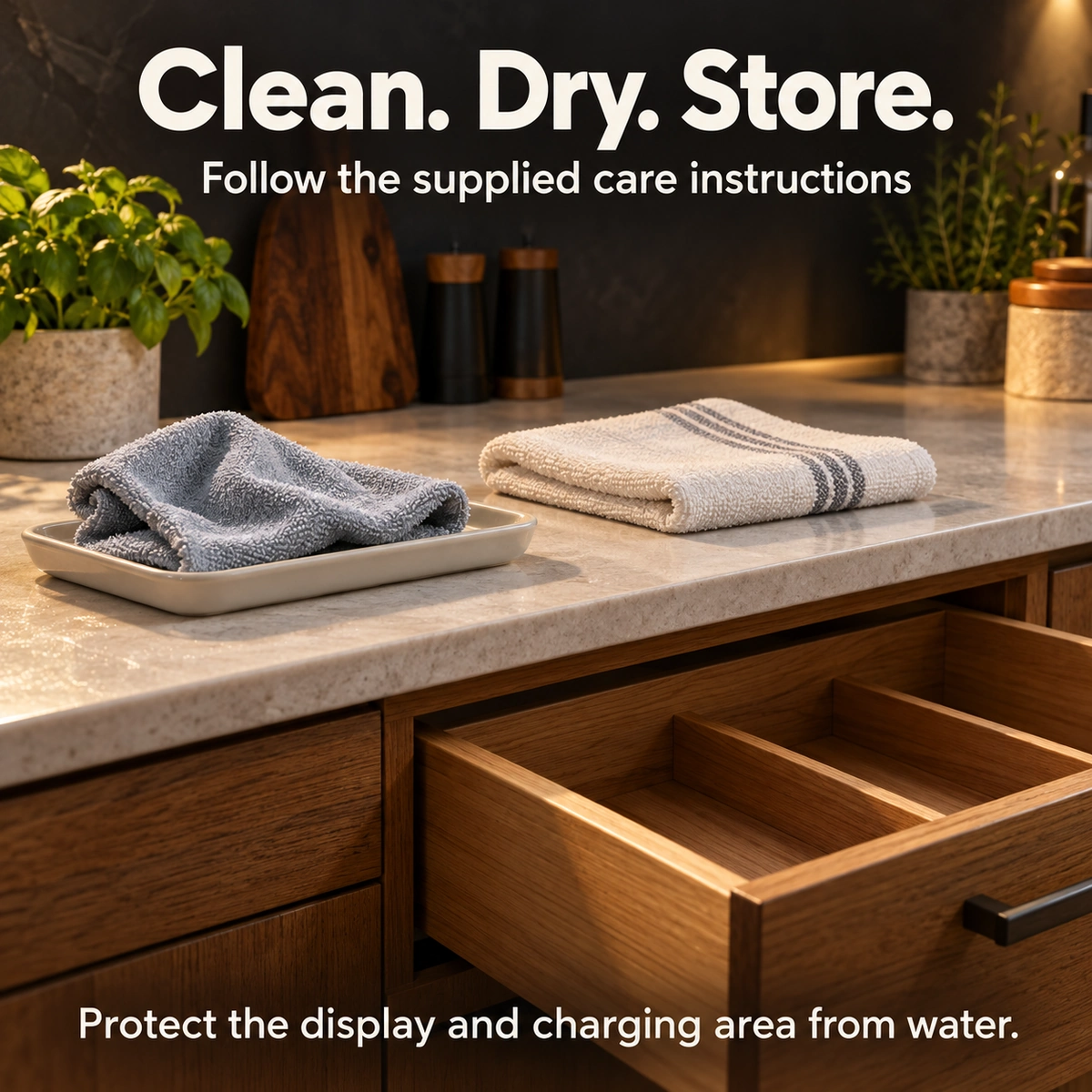
Clean food-contact surfaces as directed, but do not immerse the tool or put it in a dishwasher unless the supplied manual expressly permits that method. Protect the display and charging area from water. After cleaning, dry the tool and store the probe folded in its intended position, where the pointed end cannot catch a hand reaching into a drawer.
Check the ThermoTongs product page for the current verified specifications and care wording, then keep the supplied manual for instructions specific to the unit you receive.
Troubleshooting common problems
The number keeps changing
Hold the probe steady a little longer. Check that its sensing area is inside the central part of the food and that the tip is not sliding through a thin piece. A quick response cannot remove a real temperature gradient inside food.
Two nearby spots give different readings
Uneven food often has temperature differences. Recheck the thickest central region and let each measurement stabilize. Follow the applicable safe-temperature target and confirm that neither measurement touched bone or the plate.
One piece is ready and the others look the same
Check the others separately. Appearance does not cancel differences in thickness or grill position.
The probe is difficult to insert
Do not force it. Change the angle, make sure you are not pushing into bone, and use side entry where appropriate. Very thin, small or hard foods may require a different thermometer format.
The checking plate held an undercooked piece
Treat that plate as contaminated. Wash or replace it before placing finished food on it, and clean the probe and any tong surface that contacted the undercooked piece.
A five-question check before serving
- Is the food on a clean plate for the measurement?
- Is the probe in the thickest central area, away from bone and the plate?
- Has the display stabilized?
- Has each piece been checked against the right Canadian target?
- Are the probe, tong tips and serving plate clean for finished food?
If one answer is no, correct that step before serving. Good thermometer-tong technique is a steady routine: control the food, measure the right location, keep raw and cooked surfaces separate, and act on the result.
Frequently asked questions
Can I check food while it is still over the grill?
Health Canada advises taking meat off the grill and placing it on a clean plate for the temperature check. This provides a steadier surface and helps keep the probe away from the grate and direct flame.
How long should I wait for a ThermoTongs reading?
The product page states a 1-2 second response. Keep the probe still until the display stabilizes; do not use the first number if it is still changing.
Where should the probe go in a burger?
Insert it through the side toward the centre. Side entry keeps more of the probe inside the patty and helps prevent the tip from touching the plate.
Do I need to check every piece?
Yes. Health Canada advises checking each piece separately because thickness, grill position and centre temperature can differ.
Can ThermoTongs stay in food during cooking?
No. They are for instant-read spot checks. Insert the probe for the reading, then remove it.
Are ThermoTongs dishwasher-safe or waterproof?
Do not immerse them or put them in a dishwasher unless the supplied manual expressly permits that method. Clean the food-contact surfaces while protecting the display and charging area.
Sources
- Health Canada, Safe cooking temperatures, published June 4, 2024; accessed October 22, 2026.
- Health Canada, Food safety tips for barbecuing, accessed October 22, 2026.
- KINGEAR, BBQ Tongs with a Built-In Meat Thermometer Canada, accessed October 22, 2026.


